
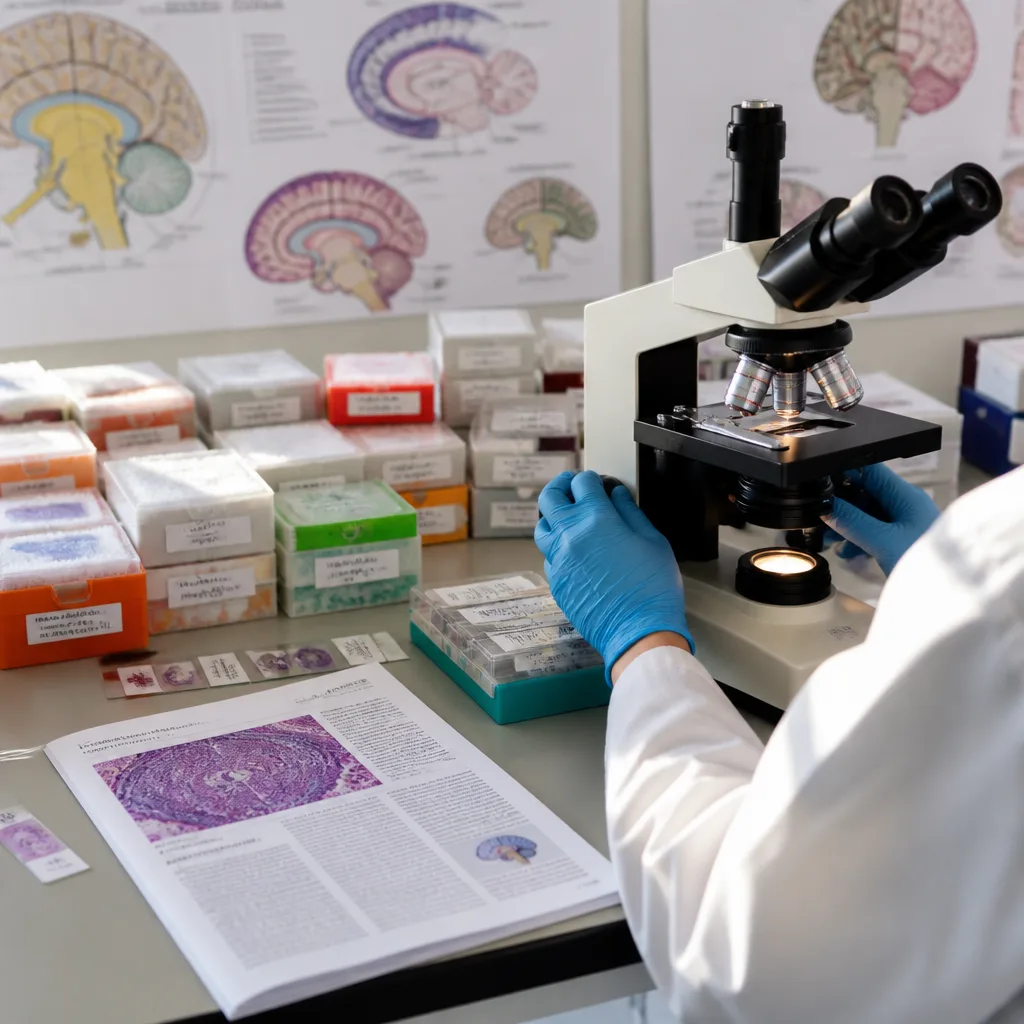
Scientists working with donated human brain samples have discovered a substantial biological change that appears to influence whether the hallmark features of Alzheimer’s disease translate into dementia. The international team — including investigators from VIB, KU Leuven, the UK Dementia Research Institute and Muna Therapeutics — published their findings in Nature Medicine and highlight alterations in the brain’s immune cells, or microglia, as a likely tipping point.
Human tissue reveals cellular programmes linked to resilience
Rather than relying on animal models alone, the researchers analysed brain tissue taken from older adults with varying cognitive outcomes, alongside samples from cognitively healthy centenarians. This approach allowed them to compare cellular states across individuals who accumulated amyloid-β plaques and tau tangles yet showed different clinical trajectories.
The study suggests that it is not simply the amount of pathological protein that determines clinical outcome, but how brain cells react to those proteins. In particular, changes in microglial behaviour were associated with either progression to dementia or maintenance of cognitive health, implying multiple biological routes to resilience.
"This has been an exciting journey with many partners. The study, entirely based on human donor material, provides insight into one type of resilience mechanism in the progression of AD to dementia," said Prof. Bart De Strooper (VIB-KU Leuven Center for Neuroscience), a co-senior author and ERC grantee.
Why microglia matter
Microglia continuously survey the brain environment and can change their activity in response to threats. The team found distinct microglial programmes and immune cell states that correlated with disease stage and with cases where pathology failed to produce dementia. These states may either exacerbate damage or support neuronal function despite protein aggregation.
- Study materials: human donor brain tissue from individuals with dementia, without dementia, and cognitively healthy centenarians.
- Key finding: divergent microglial states track with resilience versus progression to dementia.
- Implication: microglial biology presents a credible target for therapies intended to extend cognitive resilience.
Context and consequences
Alzheimer’s disease affects more than 55 million people worldwide, yet the relationship between pathological hallmarks and clinical symptoms is variable. The new work underscores a shift in research emphasis from measuring plaques and tangles to understanding cellular responses to those changes. Therapies that modulate microglial states could, in principle, help tip the balance towards resilience.
The research received funding support including an ERC grant and involved multiple collaborating institutions. Because the analysis is grounded in human tissue, the findings directly inform human biology, but further work will be needed to translate these cellular insights into safe and effective treatments.
| Group | Source material | Relevance |
|---|---|---|
| People with dementia | Donor brain tissue | Microglial states linked to progression |
| People without dementia | Donor brain tissue | Comparative cellular programmes |
| Cognitively healthy centenarians | Donor brain tissue | Evidence of resilience-linked states |
By isolating immune-cell programmes that separate clinical outcomes, this study provides a clearer map of where future interventions might act. It does not claim a single cause for resilience, but it does indicate that targeting microglial responses could be a productive route for therapies designed to preserve cognition in the face of Alzheimer’s pathology.