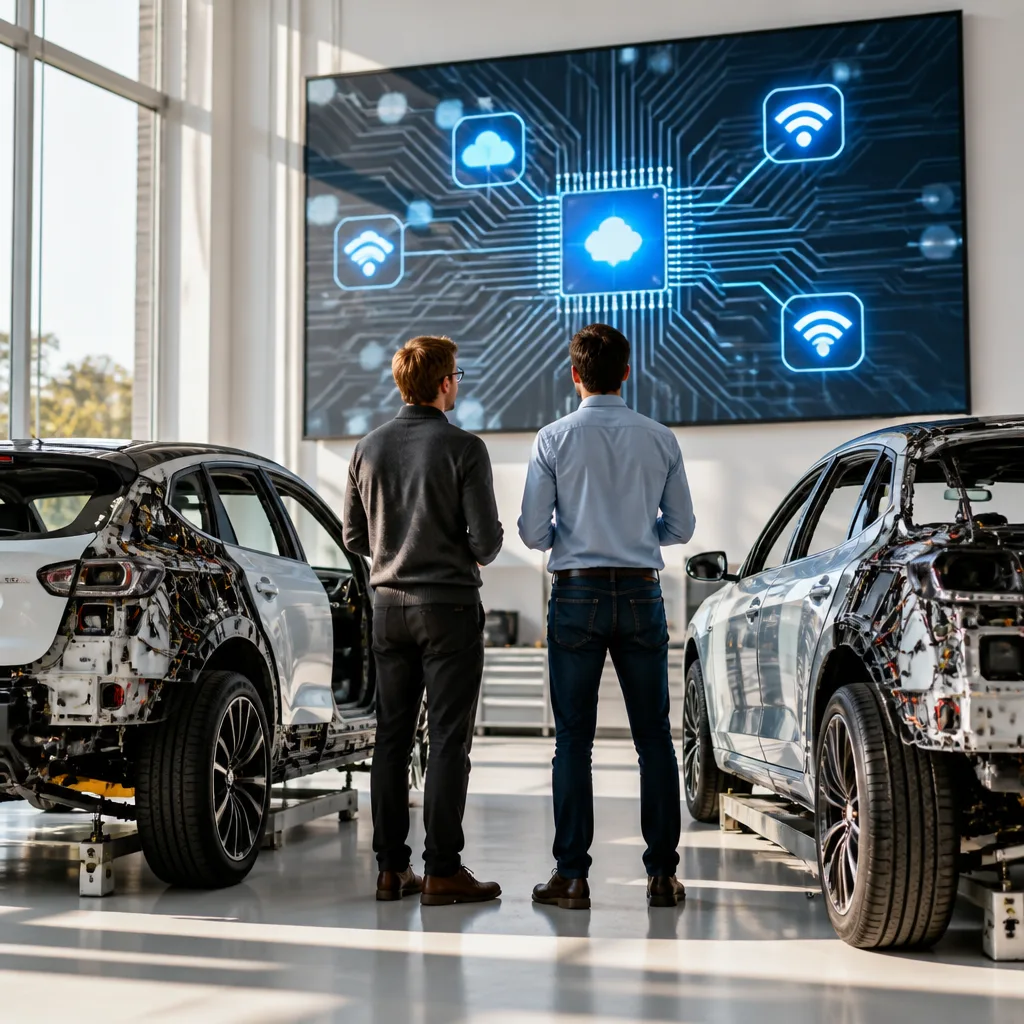
Honda Motor and Nissan Motor are advancing discussions to jointly create an operating system for software‑defined vehicles (SDVs), with the partners said to favour using technology developed by Nissan. The move is intended to boost efficiency in building vehicles where functionality — including advanced driver assistance and autonomy — can be added or improved through software updates.
Why the OS matters
In modern cars the vehicle operating system is becoming as important as the engine: it coordinates sensors, driver aids, connectivity and user interfaces, and allows manufacturers to provide new capabilities after a vehicle has left the factory. By aligning on a single platform, Honda and Nissan aim to reduce duplication of effort and accelerate development.
Background and recent cooperation
The two Japanese groups have collaborated before: in 2024 they announced plans to explore joint work on SDVs, battery systems and supply chains, and subsequently entered talks about a possible business integration. While merger discussions later fell through, the companies continued to cooperate on discrete projects. According to informed sources, the latest technical discussions have shifted towards standardising the vehicle OS and leaning on Nissan’s existing software as the foundation.
What this could deliver
- Faster feature roll‑outs — manufacturers could push upgrades for driver assistance and in‑car services over the air.
- Lower development costs — a common platform can cut repeated engineering work across brands.
- Interoperability — shared standards may simplify third‑party app and component integration.
The companies have not published technical specifications or a timetable. Sources say the partners are moving toward using Nissan’s solution as a baseline, but details of governance, licensing and long‑term roadmap remain undisclosed.
| Aspect | What we know |
|---|---|
| Partners | Honda Motor and Nissan Motor |
| Technology source | Nissan’s operating system technology (per informed sources) |
| Strategic aim | Improve development efficiency for SDVs |
The proposal is consistent with a wider industry trend: carmakers increasingly treat vehicles as platforms that can be updated and monetised via software. For the UK and European markets, any standardisation between major manufacturers could influence supplier strategies, regulatory expectations for cybersecurity and software safety, and the competitive landscape for in‑car operating systems.
For now, the announcement remains at the cooperation and planning stage. Observers will watch for further detail on technical architecture, how updates will be secured and tested, and whether other manufacturers or suppliers will adopt the resulting platform.