Rising care needs push council beyond budget
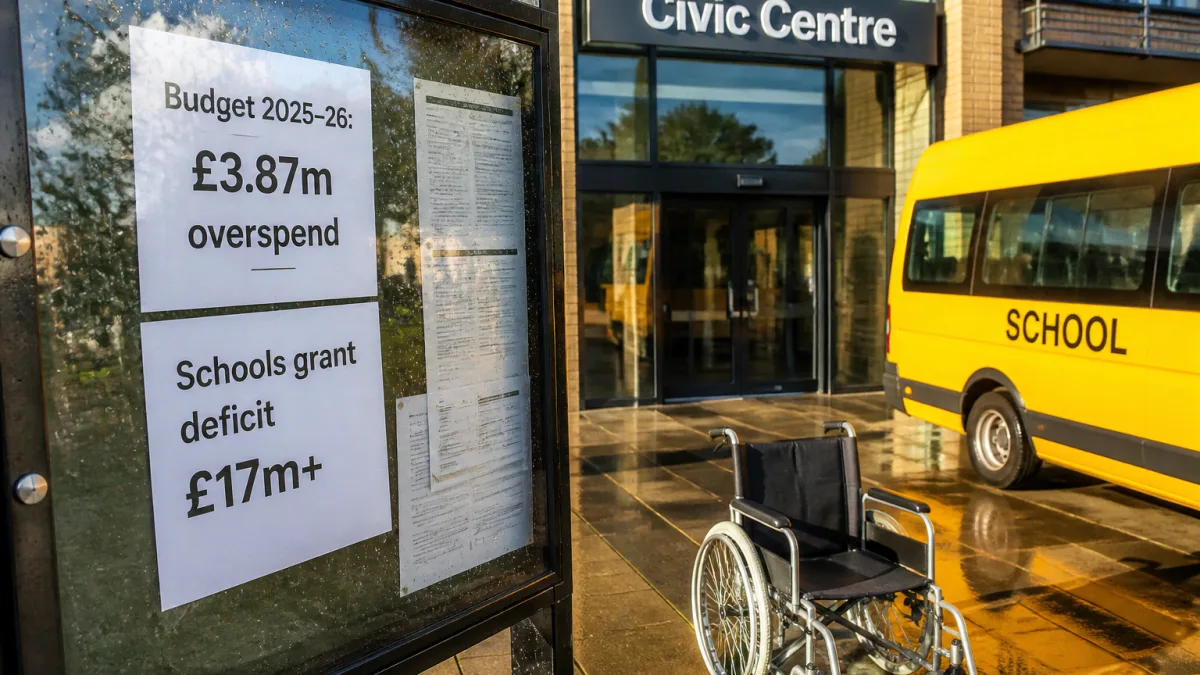
Stockton-on-Tees Borough Council closed the 2025–26 financial year with an overspend of nearly £3.87m, citing continued pressure in its largest demand-led services: adults’ and children’s social care, home to school transport and support for children with special educational needs. A separate schools grant account is also in deficit by more than £17m, according to a report due to be considered by cabinet on Thursday 16 July.
The authority says the overall position has improved compared with earlier forecasts, with reduced costs in some areas and additional income helping to offset pressures. The schools grant shortfall is expected to be managed using a combination of government funding and council reserves.
“a notable improvement in the projected financial position across most budget areas”
Adults’ and children’s services under strain
Late-year demand contributed to a £587,000 overspend in adults’ services, particularly for residential support for older residents, including those with mental health needs. Children’s social care recorded an overspend of £1.3m, driven by more external residential placements, cost pressures, fee increases and higher levels of need.
There were mitigating factors within children’s services: the council reports fewer children with disabilities requiring support, delivering savings of £200,000, alongside £140,000 in grant funding. Efforts to strengthen permanent recruitment have reduced reliance on agency staff, which the council says is helping to stabilise care for vulnerable residents.
Transport pressures eased by operational savings
Home to school transport experienced increased demand and higher costs over the year. However, these were balanced in part by additional income and efficiencies elsewhere in the environment and transport portfolio, including ground maintenance income, improvements from grant reviews and cycleway schemes, fewer winter gritting runs, contributions from the building cleaning service and staffing savings.
Income and efficiencies soften the impact
The report notes that some costs were lower than projected in the final quarter, while extra income came in through a pooled budget with the NHS and targeted grants. Staffing vacancies contributed to savings in housing, further easing pressure on the bottom line. The council’s latest Medium-Term Financial Plan update summarises these changes ahead of cabinet scrutiny.
| Area | Pressure / Saving | Amount |
|---|---|---|
| Adults’ residential services (incl. mental health) | Overspend | £587,000 |
| Children’s social care | Overspend | £1,300,000 |
| Children with disabilities | Saving | £200,000 |
| Grant funding (children’s services) | Saving | £140,000 |
| Schools grant account (separate) | Deficit | £17m+ |
What residents should know
While the outturn for 2025–26 shows an overspend, the council highlights improvement against earlier projections and points to a mix of one-off and recurring measures that have limited the scale of the deficit. The position will be examined when the medium-term plan goes before senior councillors this week.
- Overall overspend: ~£3.87m at year-end, moderated by lower costs and additional income in several areas.
- Care pressures: Increased demand in adults’ and children’s services remains the main driver of overspending.
- Schools grant deficit: £17m+ shortfall to be addressed through government support and council reserves, separate from the main budget.
Looking ahead, the council indicates that ongoing recruitment to permanent roles and closer management of placements and contracts are intended to reduce cost volatility. Nonetheless, demand-led pressures in social care and statutory transport obligations continue to shape the financial outlook.
Cabinet is scheduled to consider the updated financial plan on Thursday 16 July. Any decisions on next steps, including how the improved but still challenging position feeds into future savings or investment plans, will be taken at that meeting.