
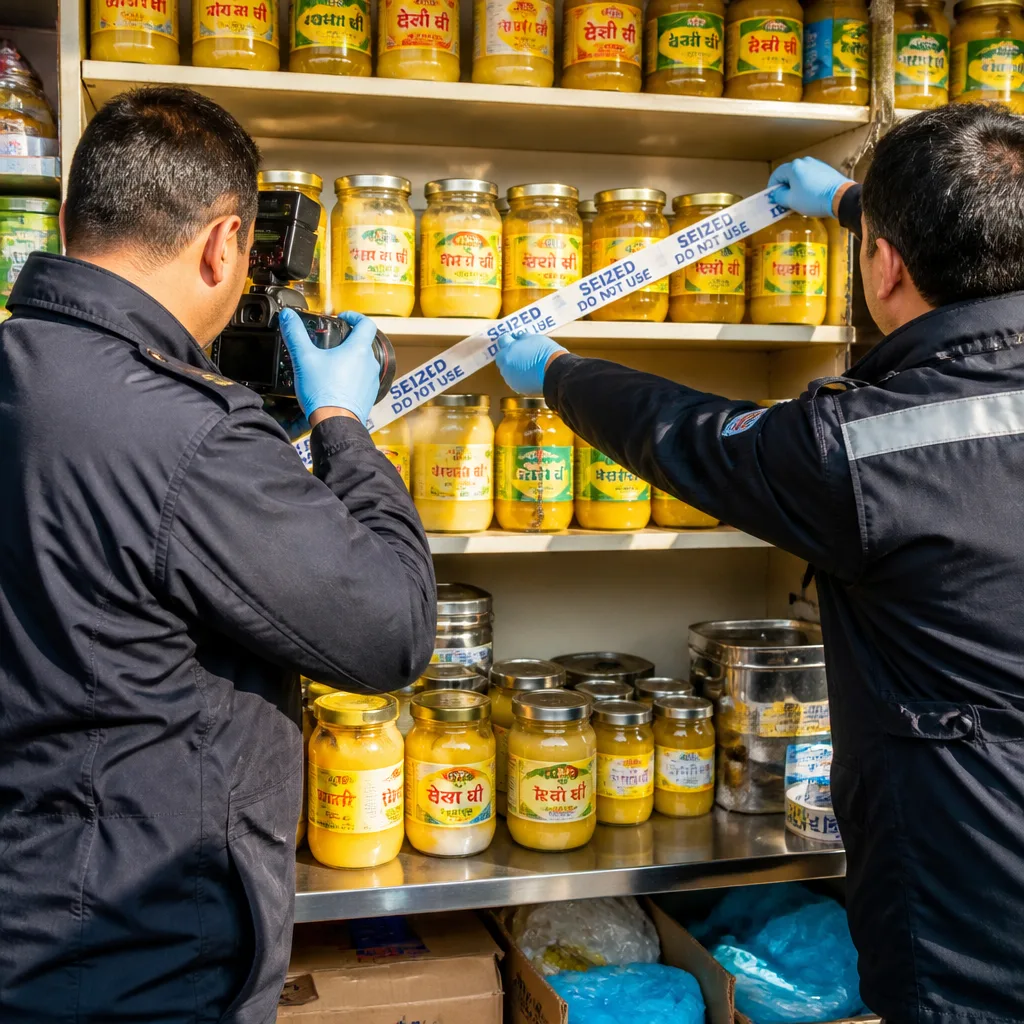
Warrington Borough Council's Public Protection Team has removed 37 litres of illegally imported Indian ghee from sale following an inspection at a business premises in the borough on 16 July 2026. The action is the fourth instance in the past 12 months that the council has taken enforcement against prohibited dairy products.
Why the products were seized
Ghee, a clarified butter commonly used in cooking, is classified as a dairy product and so is subject to UK import controls. Dairy goods manufactured in India are currently prohibited from entering the UK because India does not have an approved milk residue monitoring programme for exports. As a result, products labelled for sale in India only were deemed non-compliant and removed from sale immediately by council officers.
Immediate implications for businesses and consumers
The council has urged all local food retailers to review stock and take swift action if they hold prohibited dairy items. Officers have stressed support is available for traders uncertain about the legality of imported goods, while making clear enforcement will follow where products may risk public health.
- Enforcement frequency: this marks the fourth seizure by the council in 12 months.
- Product removed: 37 litres of ghee labelled for the Indian market.
- Regulatory reason: absence of an approved milk residue monitoring programme in India.
"Food safety remains a priority for the council, and we will continue to take action where prohibited products are found on sale," said Cllr John Kerr-Brown, cabinet member for environment, housing and public protection.
Wider context and consequences
For households, the enforcement reduces the immediate risk that non-compliant dairy products might reach consumers. For businesses, the episode underscores the need for diligence in sourcing: imported food must meet UK import and safety requirements regardless of consumer demand for ethnic or speciality items.
Local authorities across the country carry out similar inspections to ensure imported foods meet statutory standards. Where suppliers or retailers are unsure whether a product is permissible, the council recommends contacting environmental health or the relevant public protection team for guidance to avoid enforcement action.
| Item | Detail |
|---|---|
| Quantity seized | 37 litres |
| Product | Ghee (labelled for sale in India) |
| Enforcement count (12 months) | Fourth action |
The council emphasised a dual approach of supporting compliant businesses while pursuing enforcement where public health might be at risk. Traders stocking imported dairy should treat origin and certification as primary checks when acquiring products, and seek official advice where documentation is unclear.