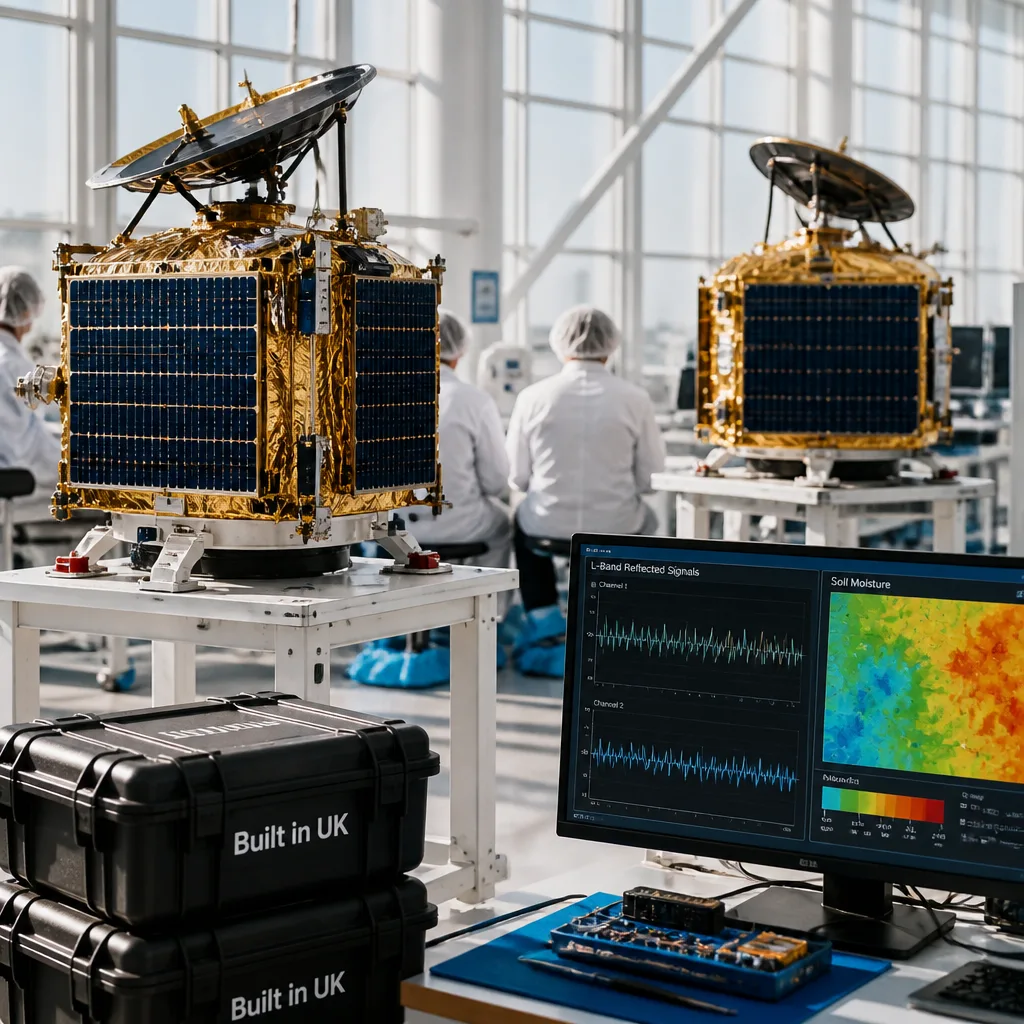
The European Space Agency’s HydroGNSS Scout mission has entered full scientific operations following an initial commissioning period, marking a step-change in passive remote sensing that relies on reflected navigation signals. The two small satellites use signals from GPS and Galileo as a source of illumination and analyse the returned L‑band echoes to retrieve hydrological information.
What HydroGNSS measures and why it matters
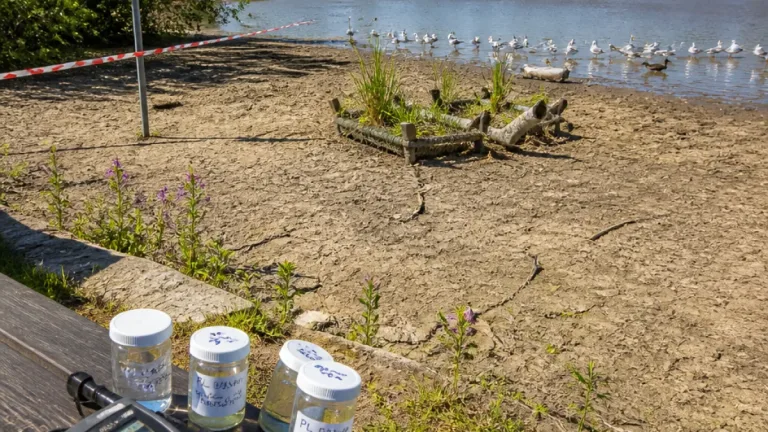
HydroGNSS retrieves a set of environmental variables important to agriculture, flood management and ecosystem monitoring. The mission’s primary targets include soil moisture, wetland inundation, the freeze–thaw state of surface materials and above‑ground biomass. By comparing the direct navigation signals with those that have scattered off the Earth, the instruments infer surface properties without emitting any radar pulse of their own.
- Passive bistatic technique: uses signals from GPS and Galileo rather than an active transmitter.
- Multi‑constellation and multi‑frequency reception for improved coverage and information content.
- Dual‑polarisation capability to help discriminate surface and vegetation effects.
Resolution and instrument characteristics
A distinguishing element of HydroGNSS is its coherent, high‑resolution processing channel. That mode analyses the phase of reflected signals to map water along the satellite ground track with a fine footprint. The team reports a spatial sharpness of approximately 300 metres along tracks from this channel, and the pair of spacecraft together build denser temporal sampling for global mapping.
| Capability | Details |
|---|---|
| Technique | GNSS reflectometry (passive bistatic) |
| Signals used | GPS and Galileo L‑band (multi‑frequency) |
| Special features | Dual polarisation; coherent high‑resolution channel (~300 m) |
| Platform supplier | Surrey Satellite Technology Ltd (SSTL) |
Context and industrial links
SSTL designed and built the HydroGNSS satellites for ESA. The payloads build on earlier GNSS‑R demonstrations — including TechDemoSat‑1 and NASA’s CYGNSS — but extend capability by exploiting multiple constellations and frequencies simultaneously. Notably, some Galileo satellites whose signals are used by HydroGNSS were also manufactured by SSTL, underscoring an unusual industrial alignment between the navigation and remote‑sensing elements.
Early comparisons of HydroGNSS products with conventional active radar suggest the L‑band reflectometry approach has advantages over higher‑frequency active systems in vegetated areas, where longer wavelengths penetrate canopies more effectively. That characteristic is especially relevant for monitoring wetlands and biomass, sectors where accurate, repeatable spaceborne measurements are in high demand.
With the mission now in its full science phase, HydroGNSS will provide a continuous stream of data intended to enhance global hydrological monitoring and to test how passive GNSS‑R can complement or, in some cases, outperform traditional active sensors.