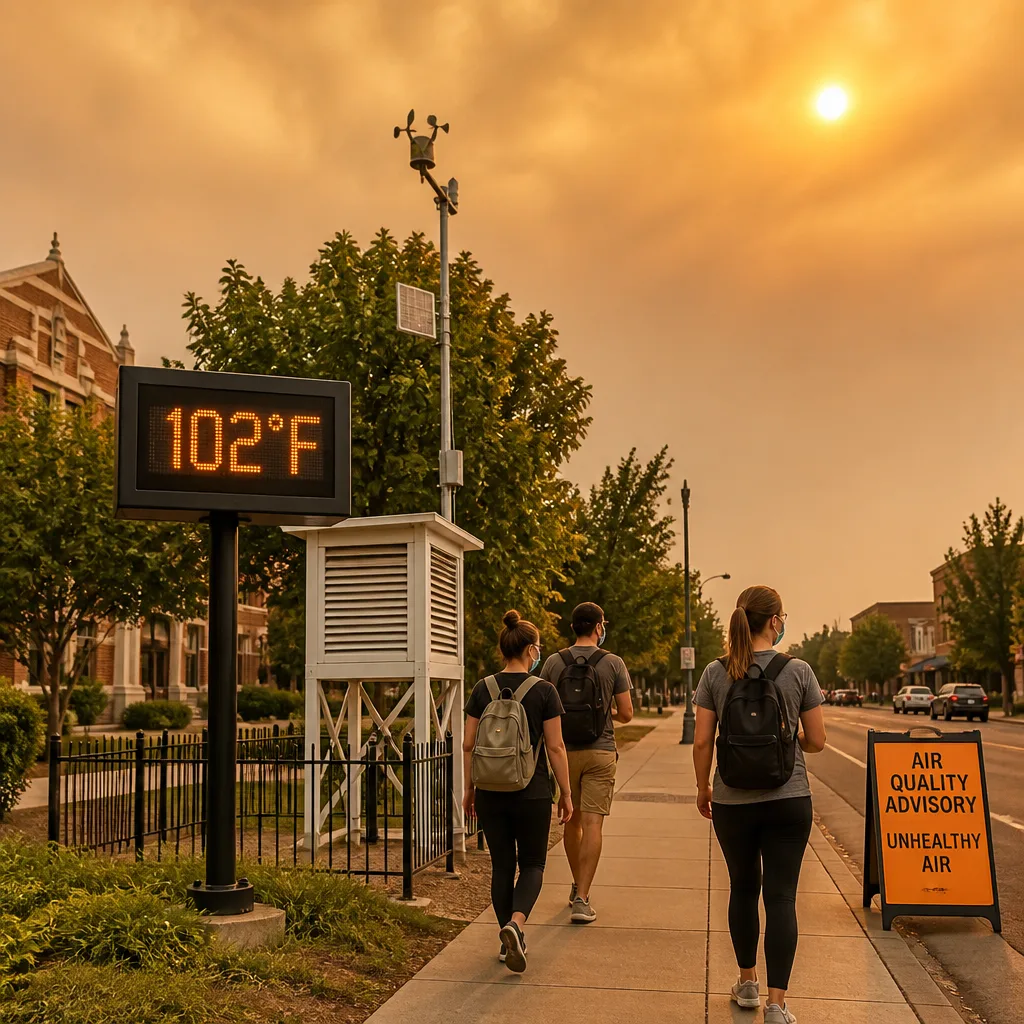
Fort Collins recorded a new high temperature for 2 August when the official Colorado State University weather station hit 102°F, continuing a hot spell that prompted a heat advisory and coincided with persistent wildfire smoke drifting into the city.
Heat, then a sharper cooldown
The National Weather Service issued a heat advisory for 3 August, with an expected afternoon maximum near 100°F. A change is forecast for 4 August: a cold front is expected to bring a substantial cooling, dropping the daytime high to about 78°F.
Smoke and air quality
Residents woke on 3 August under a sepia sky, visible evidence that wildfires burning to the west — notably in Utah and Nevada — have been injecting smoke into Colorado’s atmosphere. The Colorado Department of Public Health and Environment reported air quality in Fort Collins as unhealthy for sensitive groups as of noon on 2 August and has issued an air quality health advisory for the state's north‑west counties, including Larimer County.
"With the upper level winds shifting over the next 24 hours, it is possible that Colorado could be contending with a prolonged stretch of wildfire smoke conditions this week," the department's smoke blog said.
What to expect day‑by‑day
| Day | Forecast | Key figure |
|---|---|---|
| 2 Aug | Observed record high at official station | 102°F |
| 3 Aug | Mostly sunny, hot; chance of afternoon storms; patchy smoke | ~100°F |
| 4 Aug | Colder following front; smoke likely to persist | ~78°F |
Health and safety guidance
- People in sensitive groups (young children, the elderly, those with respiratory or cardiovascular conditions) should limit prolonged outdoor exertion while air quality is degraded.
- During the heat advisory, avoid strenuous activity during peak afternoon temperatures and ensure adequate hydration and cooling for at‑risk individuals.
- Monitor local AirNow and state public‑health updates for current air quality and any changes to advisories.
Though the incoming front is likely to relieve the heat by 4 August, smoke is expected to continue through that date. Officials note changing upper‑level winds could bring additional smoke from active fires to the north and west, potentially extending poor air quality for several days.
Further adjustments to the forecast and health guidance will depend on wildfire behaviour and evolving wind patterns; residents should follow National Weather Service and state health agency bulletins for real‑time information.