Business trips scheduled to land in the morning and move straight into meetings can leave travellers ill-prepared for high-stakes engagement after the toll of a long flight. Cabin dryness, disrupted sleep and airport delays mean arrival rarely equals readiness. Decisions about seat choice, sleep strategy and meeting timing therefore influence whether a traveller is effective on arrival or simply trying to recover.
Why the flight matters to your working day
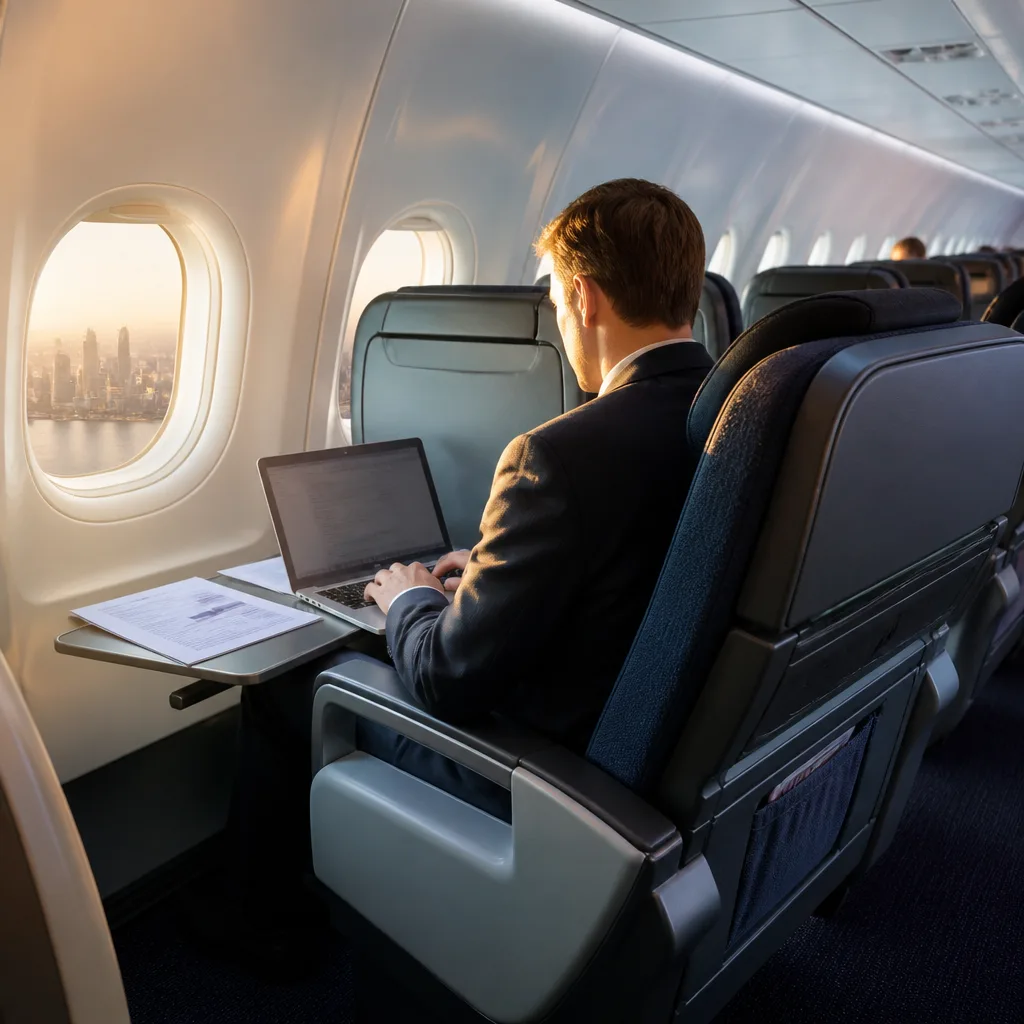
On overnight journeys the aircraft is not merely transport: it is part of the work schedule. Small comfort differences over journeys of eight, ten or twelve hours accumulate and can determine whether a presenter arrives alert or exhausted. The CDC’s guidance — cited in travel literature — recommends arriving at least two days before an important event where possible; the point highlights that landing at 08:00 does not automatically justify scheduling a 10:00 meeting.
When premium economy makes sense
Full business class remains the most effective way to protect sleep and space when budgets allow, but the premium is not always justifiable. Premium economy positions itself between standard economy and business class: wider seats, more legroom, greater recline, a smaller cabin and typically extras such as a footrest and a larger entertainment screen. For overnight flights the incremental gain in comfort can be the difference between being able to shift position and preserve energy, and spending ten hours in a constricted seat.
- Comfort features: wider seat, added legroom, increased recline, footrest, larger screen.
- Cabin size: smaller cabins provide fewer neighbours and less disturbance.
- Examples: KLM’s Premium Comfort cabin ranges from 21 to 28 seats depending on aircraft type.
Practical implications for businesses and households
For companies that send staff abroad, the choice of fare class is a risk-management decision: the extra spend on premium economy can reduce the likelihood of diminished performance in time-sensitive meetings. For individual travellers weighing cost, the calculation is similar — premium economy is often framed not as luxury but as mitigating avoidable friction before an important day.
| Choice | Typical benefit for business travellers |
|---|---|
| Economy | Lowest fare; may be adequate for short daytime flights |
| Premium economy | Better rest and space on overnight routes; reduces fatigue on arrival |
| Business class | Maximum space and sleep options where budget permits |
Organisations planning important meetings should consider the wider travel plan — not only the cheapest fare or the earliest arrival. Allowing staff extra time to recover, or permitting premium economy on overnight sectors, are practical ways to protect the value of face-to-face engagement. For travellers, awareness of how cabin conditions and scheduling interact with the body clock can help avoid setting expectations that the first hour in the conference room will be peak performance.