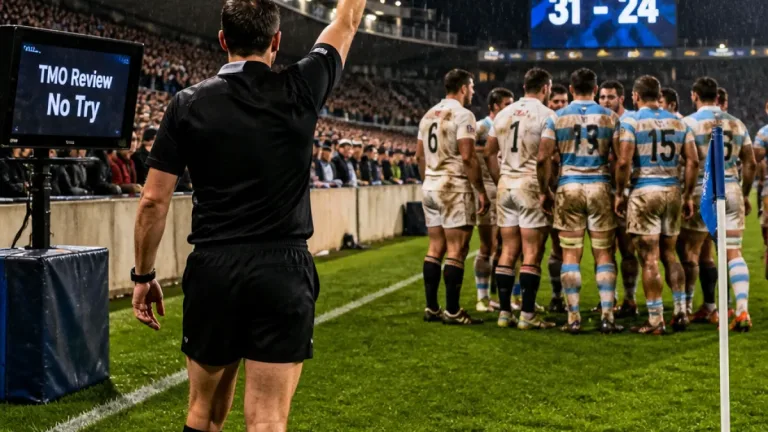
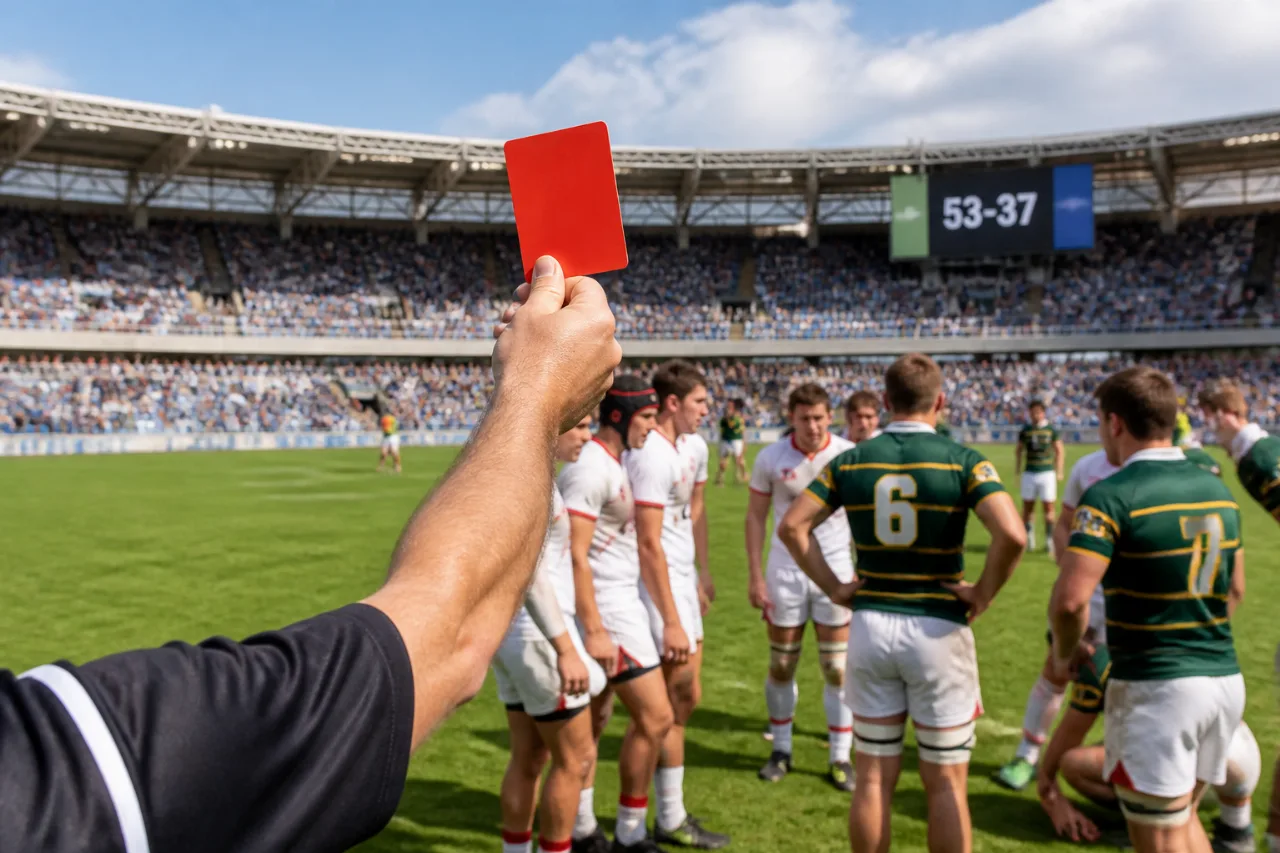
England’s hope of reclaiming the world Under-20 title was wrenched off course in Tbilisi after flanker Seb Kelly was shown a straight red card for a headbutt, opening the door for defending champions South Africa to overturn a half-time deficit and power to a 53-37 semi-final win.
A blistering start, then a fatal flashpoint
For 30 minutes, England looked every inch a finalist. A punchy set-piece laid the platform, and tries from prop Ollie Streeter and fly-half Hugh Shields propelled them into a 17-7 lead. The mood turned in an instant. After the whistle, Kelly lunged at South Africa full-back Luan Giliomee on the turf, driving his head into the opponent’s face. On referral from the television match official, referee Kevin Bralley upgraded the sanction to red, leaving England down to 14 for the remainder.
“That is inexcusable from Seb Kelly, you can’t do that,” said former England back Tom May on Premier Sports. “Yes, be tough, be physical, but that is violent.”
Even with the setback, England staggered to the interval with a 20-12 cushion. But the second half belonged entirely to the Baby Boks. With space appearing and England’s defensive line stretched thin, South Africa poured on five tries in a ferocious 20-minute burst after the break to rip the tie away and book a place in the final.
Momentum, discipline, and the cost of a moment
The difference was discipline and depth. England’s earlier control of territory and tempo could not survive the extra workload, and South Africa’s relentless carrying took its toll. The scoreboard galloped clear in the final quarter, consigning England to a high-scoring defeat that felt both preventable and mercilessly exploited. The red card was the pivot point — the kind of flash that reframes a tournament in seconds.
| Match stage | Key detail |
|---|---|
| First half | England lead 20-12 at the break |
| Red card | Seb Kelly dismissed for headbutt on Luan Giliomee |
| Second half | South Africa score 5 tries in 20 minutes |
| Final score | South Africa 53–37 England |
Judgement to come: disciplinary process looms
Kelly’s dismissal will now be assessed by a foul play review committee on Tuesday. The panel will recommend a sanction, which the player can either accept or contest at a fuller hearing. Recent precedents offer a guide but no guarantees. Over the weekend, Italy lock Niccolò Cannone received a four-match ban for head-to-head contact on New Zealand’s Cam Roigard in the All Blacks’ 47-17 victory. Kelly’s action, by contrast, appeared to involve stronger force and clearer intent. At the far end of the scale, South Africa enforcer Bakkies Botha was banned for nine weeks in 2010 for driving his head into New Zealand scrum-half Jimmy Cowan while both were grounded.
What comes next in Tbilisi
England’s tournament is not finished. They will face New Zealand in Saturday’s third-place play-off, a daunting assignment with pride and pathway development still in play. South Africa advance to meet France for the title. England last lifted this crown in 2024, when a group featuring Henry Pollock, Asher Opoku-Fordjour and Afolabi Fasogbon — all since promoted to the senior set-up — edged the French in the final, a reminder of how sharply these tournaments can shape careers.
Lessons amid the fallout
The post-mortem will be blunt. England had the platform, the rhythm and a scoreboard advantage, only to see it all swing on a split-second lapse. In age-grade rugby, these contests are laboratories for pressure — the red card becomes a hard lesson in judgement, and the second-half surge from South Africa a case study in ruthless exploitation of space and fatigue. For England, Saturday brings an immediate test of resilience against the Baby Blacks; for Kelly, the wait for the committee’s decision may be longer and more sobering.
- England led 17-7 and 20-12 at half-time before the match flipped after the red card.
- South Africa ran in five tries in a 20-minute spell to seize control and reach the final.
- Kelly’s sanction will be set by a foul play review committee, with precedents ranging from four matches to nine weeks in similar head contact cases.