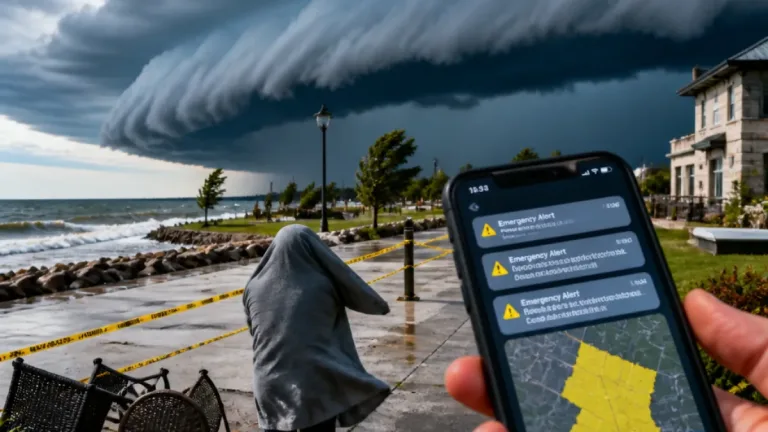

China has endured a succession of violent weather events in recent weeks — from twin tornadoes in central Hubei to torrential rain and floods that forced more than 260,000 people to flee parts of Guangxi, alongside heatwaves gripping multiple regions. Scientists say the escalation aligns with data showing the country is warming faster than the global average.
Official monitoring by the China Meteorological Administration (CMA) indicates the nation’s annual mean temperature rose by 0.31°C per decade between 1961 and 2025, according to its latest Blue Book on Climate Change released on 2 July. The CMA notes that 2025 ranked among China’s two warmest years since records began in 1901. Warming has been uneven, with northern areas outpacing the south, and the west heating faster than the east.
“Land warms faster than oceans,” said Professor Benjamin Horton of the City University of Hong Kong. “Because China is a large continental landmass, it experiences stronger warming than the global average.”
Recent incidents underscore that shift. Authorities and local media detailed widespread impacts from heavy rainfall and flooding in the south, including a reported mass escape of snakes in Guangxi amid inundation, while separate storms spawned two tornadoes in Hubei. In the northeast, scenes of deep floodwater in Shenyang were captured during Typhoon Bavi’s effects on 14 July 2026. Heat has also pressed further inland and northward, intensifying pressure on communities and services.
What the data shows
| Indicator | Figure / Detail |
|---|---|
| Warming rate (1961–2025) | +0.31°C per decade |
| Recent evacuations (floods) | 260,000+ people (Guangxi) |
| Warmest years | 2025 among the top two since 1901 |
| Regional pattern | North warming faster than south; west faster than east |
Researchers caution that the rate of change is now central to risk planning. As Horton put it, the baseline is shifting fast enough that events once deemed exceptional are becoming part of the new normal. The compound nature of hazards — heat followed by storms, or prolonged rain on saturated ground — raises the likelihood of disruption to transport, energy systems and agriculture, with knock-on effects on food supplies and household costs.
Escalating extremes across a vast landmass
China’s size helps explain the observed trend. With more land than ocean, the country’s surface warms more quickly than the planet-wide average, which includes the moderating effect of the seas. That creates steeper gradients in temperature and moisture, which can feed heavier downpours, stronger convective storms and longer hot spells. According to the CMA, northern provinces have recorded the most rapid warming, while the western interior has outstripped the east — a pattern that may influence seasonal monsoon behaviour and the intensity of summer heat.
- Severe storms: Twin tornadoes struck parts of Hubei, highlighting volatile convective conditions.
- Flood emergencies: More than 260,000 people were moved to safety in Guangxi due to persistent, heavy rainfall.
- Heatwaves: Multiple regions experienced prolonged high temperatures, compounding health and wildfire risks.
These events fit a broader pattern seen across East Asia as warmer air holds more moisture, creating heavier rainfall potential, while hotter summers increase heat stress, wildfire vulnerability and demand for cooling. The CMA’s long-term records, alongside recent extremes, add weight to concerns that climate variability is now playing out on top of a steadily rising baseline.
Implications and preparedness
For authorities and communities, the convergence of hazards calls for planning that anticipates both surges in energy demand during heatwaves and flood management during storm seasons. Although conditions vary regionally, common measures can reduce risk:
- During heatwaves: stay hydrated, limit strenuous activity at peak heat, and check on vulnerable people.
- In flood-prone periods: monitor official warnings, avoid walking or driving through floodwater, and prepare essentials in case of evacuation.
- For severe storms: heed alerts, secure loose outdoor items, and move to sturdy shelter away from windows.
While the CMA data focus on China, the findings echo a global signal: extremes are intensifying as temperatures rise. For the UK and other countries, the trajectory underscores the value of early warning systems, resilient infrastructure and public health preparedness tuned to a warmer climate.
“The rate of warming matters because societies, infrastructure, ecosystems and economies (must) adapt gradually,” Horton said. “The concern is no longer simply that summers are hotter… extremes once considered rare are becoming normal.”
With the latest Blue Book pointing to one of the hottest years on record and a clear north–south and west–east divide in warming, the recent spate of Chinese weather emergencies offers a stark snapshot of what faster warming looks like on the ground — and why speed of adaptation now matters as much as the scale.