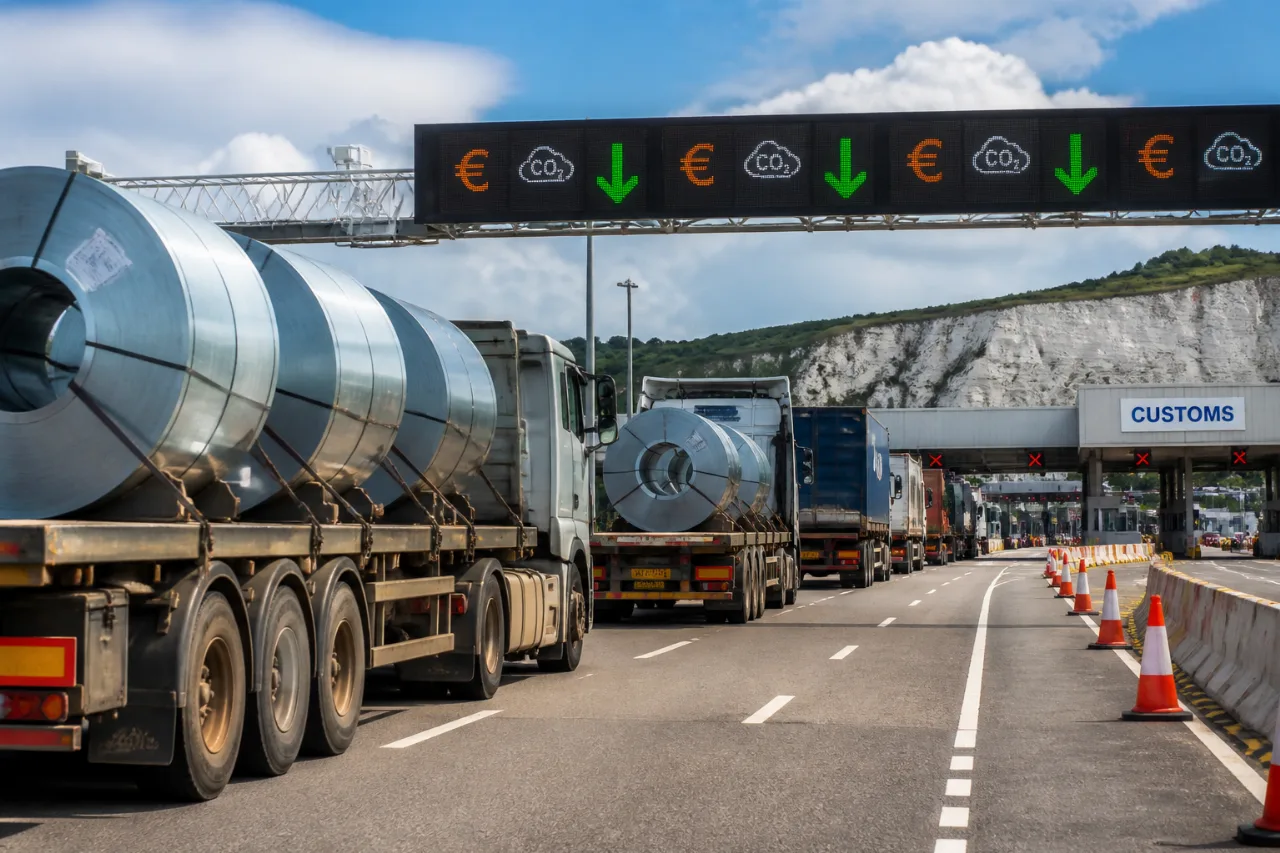
On factory floors from South Yorkshire to the West Midlands, energy-intensive manufacturers are bracing for an extra cost they can’t control: a carbon border levy at the EU frontier. A new report warns that, without a swift agreement to align the UK’s carbon market with the bloc’s, British exporters could be hit with charges totalling up to £800 million by 2030.
Call for a stopgap to head off new costs
The UK Trade and Business Commission is urging Britain and the EU to grant companies reciprocal exemptions from their respective Carbon Border Adjustment Mechanisms (CBAMs) while a broader deal to link emissions trading systems (ETS) is finalised. The cross‑party body says this temporary fix should take effect as soon as a UK–EU ETS agreement is signed and remain in place until the linked system is operational, sparing firms from duplicate charges during the implementation period.
The UK introduced its own Emissions Trading System in January 2021, a cap‑and‑trade regime requiring emitters to buy allowances for the carbon they release. The EU’s CBAM — designed to level the playing field by placing a carbon price on imports of energy‑intensive goods — entered into force in January 2026. Without an exemption, the report says UK exporters are due to be caught by its second year, meaning charges would begin to bite unless a deal is in place before January 2027.
What’s at stake for British industry
The commission argues that a reciprocal exemption could shield around £7 billion of UK exports from EU carbon border taxes while talks continue. It also points to potential gains from closer integration of the two carbon markets: government figures cited in the report suggest linking the UK and EU ETS could add approximately £3 billion to UK GDP by 2040.
Energy‑intensive manufacturing regions are flagged as the likely winners from a deal that reduces administrative friction and avoids duplicate compliance. The report highlights indicative economic benefits from deeper UK–EU integration:
| Region | Illustrative potential gains |
|---|---|
| Yorkshire | £641 million+ |
| The Midlands | £1.38 billion |
| North East | £216 million |
Why a link matters now
At the core is the risk of UK exporters paying twice: once under the UK ETS and again at the EU border under CBAM if the systems remain unlinked. Aligning the schemes, the commission says, could streamline compliance, cut red tape and ensure British producers are recognised as already paying for their emissions. The proposed stopgap exemption is framed as a practical measure to bridge the gap between a political agreement and the date technical arrangements take effect.
While the report focuses on trade friction, it also underlines the case for coordinated energy policy. It calls for closer UK–EU cooperation on affordable and secure clean energy, including joint consultation before either side changes or expands its ETS, to avoid unintended cost shocks for exporters and importers.
Skills, supply chains and the long transition
Beyond border policy, the commission urges a long‑term workforce plan to underpin decarbonisation. It recommends investment in STEM education, technical training and reskilling to support existing workers as heavy industry cuts emissions. Those measures, it argues, would help manufacturers compete as carbon pricing tightens and customers increasingly demand low‑emission products.
- Agree a UK–EU ETS link and introduce reciprocal CBAM exemptions during the transition.
- Coordinate on clean energy affordability and security to stabilise costs for industry.
- Back a clean energy workforce strategy with training and reskilling investment.
Countdown to 2027
The timeline is tight. With the EU border regime already live, the window to secure an exemption before its second year is narrowing. For exporters of steel, cement and other carbon‑heavy goods — the early focus of CBAM — the difference between a linked system and no deal could be measured in millions of pounds added to operating costs and the competitiveness of bids into the EU.
The commission’s analysis places the decision squarely in the context of post‑Brexit economic policy: a technical fix to carbon pricing that could remove a looming barrier to trade while preserving domestic climate ambition. The next steps will depend on whether negotiators in London and Brussels can translate broad alignment on climate goals into the legal plumbing of a shared carbon market — and do so quickly enough to keep new costs from landing on British order books.